Institutional Staking and Vaults for Wallets
Staking and vaults. Signing stays local.
P2P.org's Unified API and Signer SDK give wallets one integration point to embed staking across 35+ networks, with local signing handled client-side. For ETH staking below the 32 ETH minimum, the Pooled Staking API offers white-label vaults. Protected Vaults extend the offering. The Widget embeds both via iframe or webview. Non-custodial throughout.
Embedded Staking Infrastructure Built for Wallets
Wallets need staking infrastructure that integrates quickly, keeps signing local, and scales across networks without separate integrations per chain.
Signer SDK coverage
15+ networks
ETH stake size
No minimum
Staking access
Widget
Yield beyond staking
Protected Vaults*
Reward reporting via
Staking Data
RPC coverage
220+ networks
Security & Compliance




Products
Products for Wallets
*Protected refers to security and operational controls, not a guarantee of returns.

Unified API + Signer SDK
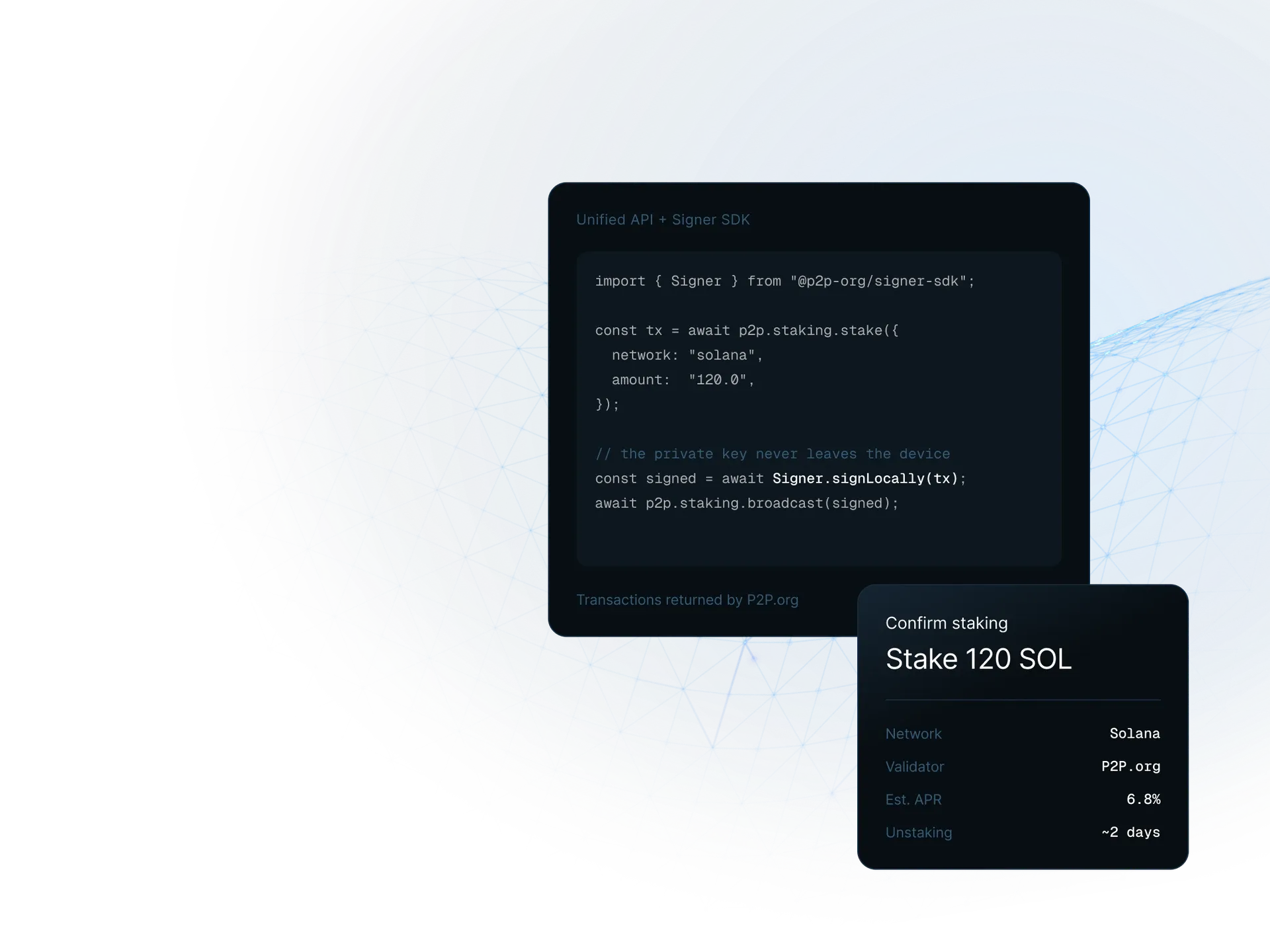
One key across 35+ networks with local transaction signing handled client-side. The primary embedded staking integration for wallets.

Staking API
Per-chain staking layer beneath the Unified API, for wallets requiring chain-specific control. Only unsigned transactions generated throughout.

Pooled Staking API
ETH staking below the 32 ETH minimum for wallet users. White-label vaults, full lifecycle via API, no minimum deposit size for end users.

Staking Data
Validator, network, and delegator data across 7 networks. Balance and reward reporting for wallet-facing account statements and reconciliation.

Wallet Data API
Cross-chain portfolio visibility: token balances, transaction history, DeFi positions, and P&L across supported networks in one interface.

Protected Vaults*
Offer simple vault yield on top of overcollateralized markets. Transparent parameters, white-label and non-custodial, embedded under the wallet's own brand.

dRPC NodeCloud
Managed multi-chain RPC access across 220+ networks for wallets running their own onchain infrastructure alongside staking.

Widget
Staking and onchain protocol access embedded via iframe or webview. White-label, configurable to any brand. Live in Ledger Wallet.


P2P.org by numbers
P2P.org is a non-custodial staking and DeFi infrastructure provider serving institutional clients across 35+ blockchain networks. Founded in 2018, P2P.org operates validator infrastructure, DeFi execution controls, and transaction data services for custodians, exchanges, asset managers, wallets, and treasury teams worldwide.
Networks supported
35+
Institutional digital assets secured
$10B+
Dedicated support
Global
Operating infrastructure since
2018
Institutional clients
190+
Slashing events track record
Zero
Trusted by industry leaders












Frequently Asked Questions
Help centerWallets integrate through the Unified API and Signer SDK: one key covers 35+ networks, P2P.org returns unsigned transactions, and the SDK signs them client-side so private keys never leave the device. Wallets that need chain-specific control can use the per-network Staking API underneath.
Yes. The Pooled Staking API pools user deposits into white-label vaults, so wallet users can stake any amount of ETH. The full lifecycle, from deposit and rewards to exit and withdrawal, is handled via API with no minimum deposit size for end users.
The Widget. It embeds staking and onchain protocol access via iframe or webview, is white-label and configurable to any brand, and needs no per-network integration work. It is live today in Ledger Wallet.
Yes. P2P.org never takes custody of user assets. Every transaction is signed within the wallet, client-side via the Signer SDK or inside the wallet's own key management setup, and staked assets remain under the user's control throughout.
Staking Data supplies validator, network and delegator data with protocol-issued reward history across supported networks, which wallets use for balance and reward reporting in user-facing account views and for reconciliation. The Wallet Data API adds cross-chain token balances, transaction history, DeFi positions and P&L.
Yes. The P2P.org Widget is live in Ledger Wallet, where it provides embedded staking and onchain protocol access to Ledger users under Ledger's own brand.